Geosynthetic Soil Reinforcement Storage and Handling Best Practices
Avg. Read Time: 1 min, 51 sec
The Ground Work
Short on time? Here are this article’s key takeaways…
Follow industry best practices from Solmax to help ensure geosynthetic soil reinforcement performs as designed after installation.
Inspect each roll upon delivery and protect the wrapping, core, label, and reinforcement material from damage during handling.
Store rolls off the ground and shield them from sunlight, extreme heat, chemicals, fire, and physical damage.
Proper storage and handling preserve material properties and help prevent avoidable performance issues in the completed wall system.
Proper storage and handling are critical to ensuring geosynthetic soil reinforcement performs as designed after installation. The recommendations below are based on installation guidance from Solmax, one of the world's leading geosynthetic manufacturers and the producer of MIRAGRID® soil reinforcement products. Following these industry-established best practices helps preserve material performance from delivery through installation.
Why Smart Storage and Handling Matter
Geosynthetic reinforcement is engineered to provide long-term soil stabilization and structural support. Damage caused during transportation, storage, or jobsite handling can affect material properties and potentially compromise long-term wall performance. Taking the proper precautions before installation helps ensure the reinforcement performs as intended in the design.
Material Identification
Before installation, verify that each roll is clearly identified and in good condition.
- Confirm that each roll includes a legible manufacturer's label.
- Verify the manufacturer name, product style, and roll number before use.
- Inspect the protective wrapping for tears, punctures, or other damage.
Handling and Transportation
Careful handling helps preserve the integrity of the geosynthetic material.
- Prevent damage to the protective wrapping, core, label, and geosynthetic roll during unloading and movement.
- Use equipment and lifting methods that minimize the risk of crushing, tearing, or deforming the roll.
- Avoid dragging rolls across the ground or rough surfaces.
Storage Requirements
When storing geosynthetic reinforcement on-site or in a yard:
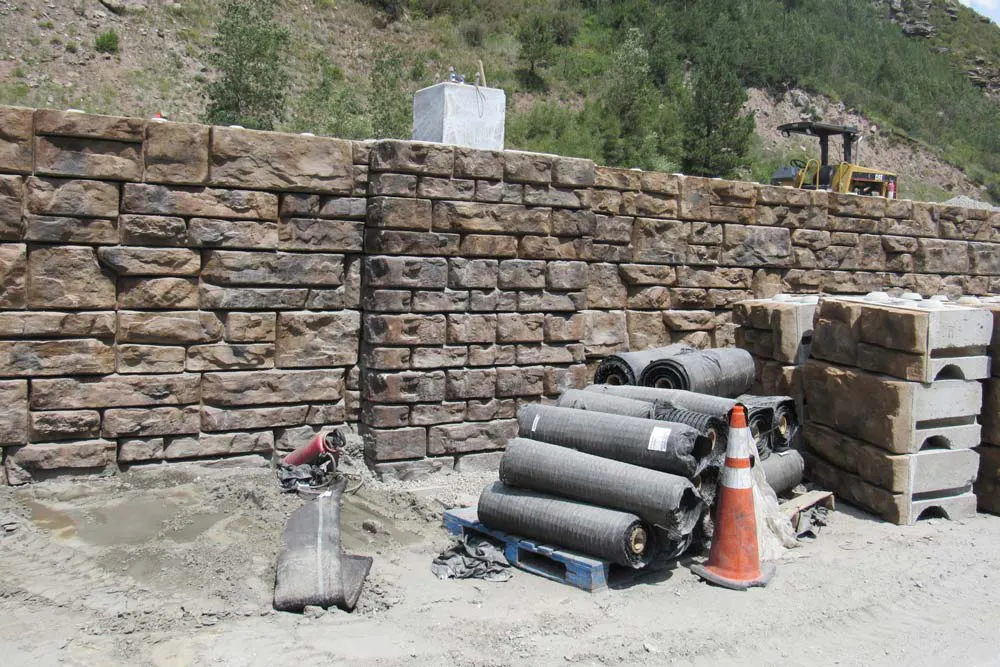
- Store rolls off the ground whenever possible.
- Keep rolls adequately covered and protected during storage.
- Ensure labels remain visible and intact for identification purposes.
- Protect rolls from physical damage caused by equipment traffic or material stockpiles.

Environmental Protection
To maintain material performance, protect geosynthetic reinforcement from exposure to:
- Direct sunlight and ultraviolet (UV) radiation
- Strong acids or strong bases
- Fire, open flames, or welding sparks
- Temperatures exceeding 140°F (60°C)
- Damage caused by people, animals, or unauthorized site activity

Geosynthetic reinforcement should arrive at installation in the same condition it left the manufacturer. Maintaining the integrity of the roll, wrapping, labeling, and material itself helps ensure the reinforcement can achieve its intended design performance once installed.